
Tree Removal Permits in Oakland County, by Community
Updated September 7, 2026 · Written by Rob Burgund, ISA Certified Arborist MI-4857A
- ISA Certified Arborist MI-4857A
- Working in Oakland County since 2013
- Licensed and insured
- 5.0 stars from 16 Google reviews

Written by Rob Burgund
ISA Certified Arborist · MI-4857A
Rob confirms the permit position with your city as part of every estimate. He has been doing tree work in Oakland County since 2013. More about Rob and Tree Pros, or verify the certification in ISA’s public directory.
Here is what applies where, so you know before you book anyone.
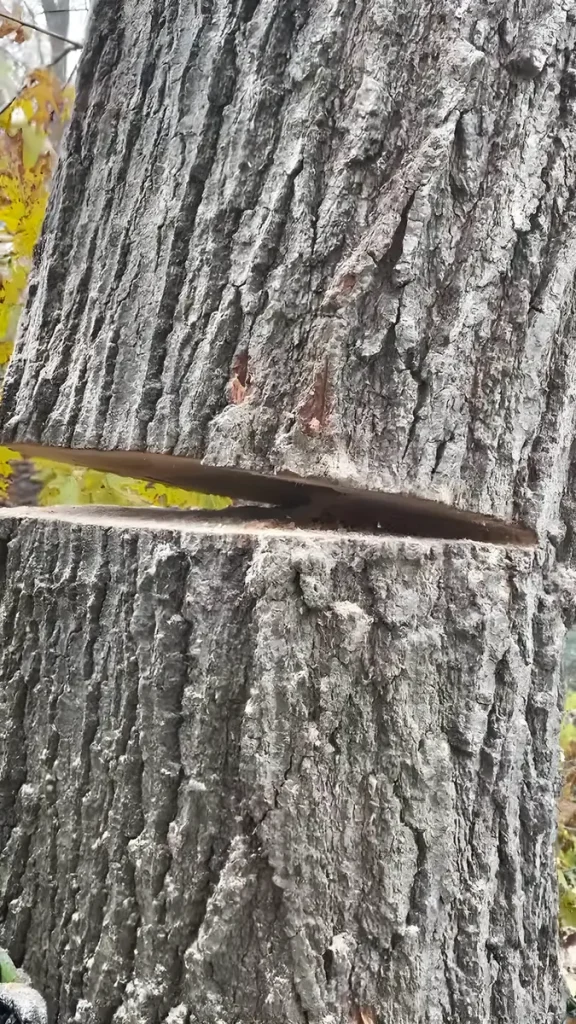
Ordinances change, and how they apply often depends on your specific parcel, such as whether it sits in a mapped woodland or a wetland buffer or a right of way. Treat this page as the starting point for the right question, not as legal advice. We confirm the current rules with your municipality as part of every free estimate.
One term to know: DBH
Nearly every ordinance below is written in DBH, which stands for diameter at breast height. It is the thickness of the trunk measured about 4.5 feet off the ground. Not the tree’s height, and not its canopy spread.
So when a city says it regulates trees “8 inches and up,” that means 8 inches of trunk at chest height. That is a smaller tree than most people picture.
Permit rules by community
| Community | The rule | In short |
|---|---|---|
| Novi | Protects nearly any tree 36″ DBH or larger, even outside regulated woodlands. Inside a regulated woodland, the threshold drops to 8″. | Broad protection for mature trees |
| Bloomfield Hills | Two trees without a permit on parcels under 1.5 acres, three above. Every removal plan is reviewed by the city. | Counted, not measured |
| West Bloomfield | Most private property is not regulated, unless the parcel sits in a designated woodland, a delineated wetland, or the 25-foot Environmental Features Setback. | It depends entirely on location |
| Waterford | The Protected Tree List and replacement rules (Code of Ordinances Ch. 8, Art. VII) apply mainly to vacant parcels. Occupied lots and dead trees are exempt, and wetland and lakefront rules still apply. | Mostly about vacant land |
| Troy | Tree and woodland preservation runs under Section 13.07 of the Zoning Ordinance. | Confirm parcel by parcel |
| Rochester Hills | Regulates trees 6″ DBH and up, but occupied single-family lots under one acre are exempt. Right-of-way and landmark trees always need a permit. | Your lot size decides it |
| Birmingham | Private tree removal is at the owner’s discretion, per the city’s own forestry guidance. Right-of-way trees belong to the city, and tree protection plans apply during construction. | The right-of-way is the catch |
| Royal Oak | The strip between sidewalk and street holds city trees. Inside your property line, the decision is generally yours. | Know where the line is |
| Farmington Hills | Permit required from 6″ DBH. Homeowners may remove two protected trees per calendar year without one, but landmark trees (24″+) always need a permit. Dead trees are exempt. | Stricter than it looks |
Each community name links to our page for that city, with the local tree stock and what removals tend to cost there.
What usually triggers a permit
The same handful of factors comes up across the county.
- Trunk diameter. Thresholds run from 6 inches to 36 inches DBH depending on the community.
- Whether the parcel is mapped as woodland. This is the one that trips people up most. The identical tree can be unregulated on the next street and protected on yours.
- Wetland and shoreline setbacks. Common across the lakes communities, and they frequently override the general rule.
- Tree count. A few communities allow a set number of removals per parcel or per year before paperwork kicks in.
- The right of way. That strip between the sidewalk and the street is almost always a city tree, no matter who mows around it.
Most people assume a dead tree needs the same paperwork as a live one. Across most of Oakland County the opposite is true: Farmington Hills and Waterford both exempt dead trees outright. The exception is a mapped woodland area, where trees are regulated at any size and in any condition. Remove a protected tree without approval and you are typically looking at a fine plus a replacement requirement, far more than the permit would have cost.
What about emergencies?
If a tree is on your house or blocking the driveway after a storm, safety comes first. Nobody at city hall expects you to file a form while a tree is on your roof.
We photograph the condition before and during the work, which satisfies both the city and your insurance adjuster. Our storm damage page covers the rest of that process.
Once the permit is sorted, what does the removal cost?
Most removals in Oakland County run $600 to $2,500, and the permit rarely changes that number. What does change it is access, what sits under the tree, and whether the tree is dead. The Oakland County cost guide walks through all of it, and the tree removal page explains what is included in our quotes. Where a permit requires replacement trees or a payment into a city tree fund, we tell you before you decide, because in a place like Novi that can be the biggest line on the job.
What customers say about the process
5.0 stars from 16 Google reviews as of October 2026. Every quote below is copied word for word from our Google listing, where you can read all of them.
- “They did a great job. Quoted right away. Very reasonable pricing. Came right out and took care of the job. Cleaned up after. Great experience.”
Alex M. · August 2026 · Google review - “Tree Pros removed several trees at my work place and trimmed a couple of trees at my home. Rob, his team, and work fleet are professional in appearance and excellent in performance. They did a great job and cleaned up the yard before leaving. If you are in need of tree work, this is the company you call.”
Mike P. · July 2026 · Google review - “Tree Pros did a great job for me and my for my brother. Dropped everything on the ground like pros should and cleaned up well. Good pricing too. I’ll recommend them to anyone.”
Brett R. · May 2026 · Google review
Permit questions we hear most
Do I need a permit to cut down a tree on my own property in Michigan?
It depends entirely on your municipality, because Michigan has no state-level rule for trees on private residential property. In Oakland County the rules are written by each city or township, and most of them are triggered by trunk diameter at breast height, or DBH, measured about 4.5 feet up. Novi protects nearly any tree 36 inches DBH and up anywhere on a parcel, and drops to 8 inches inside a regulated woodland. Farmington Hills requires a permit from 6 inches DBH but lets homeowners take two protected trees a year without one. Rochester Hills regulates from 6 inches but exempts occupied single-family lots under an acre. Bloomfield Hills counts trees per lot instead of measuring them. Birmingham leaves private trees to the owner. Troy, West Bloomfield and Waterford depend on whether your parcel sits in a mapped woodland, wetland or setback. Dead trees are exempt in several communities, but never inside a mapped woodland. Because the answer is parcel-specific, we confirm it with your municipality as part of every free estimate before anything gets scheduled.
What does DBH mean?
Diameter at breast height, which is the trunk’s thickness measured roughly 4.5 feet above the ground. Almost every tree ordinance is written in DBH rather than in tree height or canopy size.
What happens if I remove a protected tree without a permit?
Typically a fine plus a requirement to replace the tree, and the replacement is where the real cost lives. Some communities require several replacement trees for one removed, at sizes that cost hundreds of dollars each installed, or a payment into the city’s tree fund in place of planting. Novi in particular can require multiple replacements. Inside a mapped woodland the penalties apply at any size and even to dead trees, because the woodland itself is what is protected. The permit, by comparison, is usually a form, a fee and a short review, and in several communities it is not needed at all for a dead tree on an occupied lot. It always costs considerably less than the fine. If you are not sure whether your tree is regulated, do not guess and do not let a contractor guess for you. We make the call to the city before the work is scheduled, and we put the answer in the written quote.
Can the tree service pull the permit for me?
Generally yes. We handle the inquiry and the paperwork as part of the job across the communities we serve.
Does this apply to trimming, or only removal?
Removal is usually the trigger, but heavy pruning of a protected tree can be regulated too, particularly inside woodland areas.
Do I need a permit to remove a dead tree?
In most of Oakland County, no. Farmington Hills and Waterford both exempt dead trees outright, and several other communities only regulate live trees on occupied lots. The exceptions are the ones that catch people. Inside a mapped woodland, trees are regulated at any size and in any condition, dead or alive, because the ordinance protects the woodland rather than the individual tree. Right-of-way trees, the ones between the sidewalk and the street, belong to the city no matter their condition. And in Bloomfield Hills, dead trees often still need to be reported so the city can confirm the condition before removal. The safe habit is to photograph the tree before it comes down, showing the dead crown, the bark loss or the fungal growth, so there is a dated record of its condition. We do that on every removal, and we confirm with your city before scheduling. A dead ash is the common case here, and our EAB guide explains why waiting on one costs more every year.
What removal costs once you have the permit →Michigan tree law: neighbors and liability →Tree removal and crane work →All tree care guides →
Not sure what applies to your tree?
We check the current position with your municipality as part of the free estimate, before anything gets scheduled.